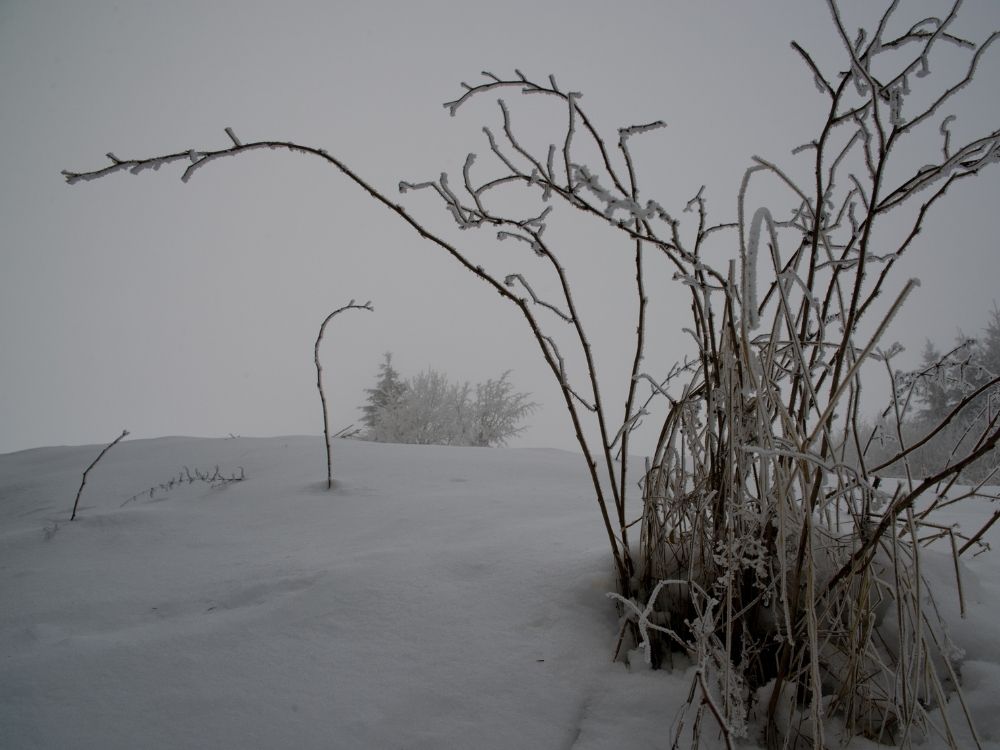
There are seasons in life that feel like unraveling. These are the profound winters. They require endurance to get through and then deep work to move forward from and transform. While often deeply painful, these seasons when navigated for purpose can become quite sacred.
As I have been writing about the 5Rs of restoring over the last few posts, I have been sitting in some tension when it comes to writing about the reality of the profound winter seasons that some people are left to navigate.
On one hand, I know it’s important to acknowledge and speak to the reality (as best as I can), so my silence is not taken to infer that such winter seasons don’t exist, or as another way to minimize people’s experience.
On the other hand, I am aware that realistically, I cannot possibly do them justice in a blog post and may appear to be glossing over the significance.
5 R’s of Restoring
Restoring (overarching purpose)
Renewing
Reflecting
Releasing
Resourcing (supports all seasons)
| Related Posts: Growth and Transformation |
There likely isn’t a “right” way to write such a post.
And yet, here it is.
If this post applies to you in the present or the past, know that my intention is to stand with you, to the best of my consciousness and ability.
If this post does not apply to you and perhaps brings you discomfort, then I invite you to sit in that discomfort and stretch yourself to better understand what others might be experiencing.
Not All Winters are the Same
There is a plethora of platitudes in the self-help and social media culture.
“Everything happens for a reason/to serve you”.
“What doesn’t kill you makes you stronger.”
“You can do anything you set your mind to”.
“Try harder”.
“Time heals all wounds”.
“You just need to forgive”.
“Just have faith.”
“Love yourself.”
“”Look on the bright side.” “Think positive”.
“There’s good in everything and everyone”.
“Let Go and Move On.”
It’s not that such statements are entirely untrue and have absolutely no basis. It’s that they are far too simplistic.
They may apply, to some degree, to life in general and the regular run of the mill winters that many people experience such as job loss, a divorce, moving through a short-term illness, learning to live with and manage a chronic illness, losing a loved one, or dealing with death. Difficulties and tragedies where people have self and support. And even here, they can still risk oversimplifying, negating the complexity, and minimizing what people are experiencing.
But not all winters are the same.
There are winters that are profound. The circumstances themselves are profound. And the pronounced harm that people are left with is also profound. It can take years, even generations to come out of.
Platitudes are ill-placed, and should not exist alongside these kinds of winters… in my opinion.
These kinds of profound winters have some or all of these qualities:
- Pernicious and harmful and destructive through time.
- Pervasive and having a widespread negative effect overall, within a person, and a people.
- Perverse and betraying of what is legally, morally, and relationally expected and acceptable.
- Perversive and contributing to the decline of what is legally, morally, and relationally expected and acceptable.
- Piled and comprised of multiple winters, with limited opportunity for retreating and restoration in between.
- Poisonous, unconscious, and/or malicious with intent, indifference, secrecy, concealment, justification, denial, and minimization or externalization of blame to others and victims.
- Prejudicial, oppressing and harming select individuals, groups, or communities of individuals, who have been afforded less privilege and power by the discriminations of the larger society or individuals within it. (sometimes in multiplying ways as outlined through the lens of intersectionality)
- Proliferating and resulting in harm replicated to multiple victims, across generations, and even by victims becoming perpetrators.
- Prolonged and often lasting years.
- Powerlessness and having one’s power disregarded or taken away.
These are the kinds of winters you can’t really imagine unless you have experienced them or done your best to learn about and try and bear witness to them. But even then, you will only know of them, and do not know them through lived experience.
These are the kinds of winters often experienced in such circumstances as: children growing up with severe abuse and neglect, those caught in sex trafficking, Indigenous peoples resulting from colonization and decades of residential schools, those surviving atrocities like genocides or terrorist attacks, and historically by many who are homeless or in prison. And on and on.
You’re Not Alone Even Though You Likely Think You Are
These kinds of profound winters can leave us feeling very alone.
We can feel alone with a higher power because there is no satisfying way to make sense of what is truly harmful and senseless.
We can feel alone with ourselves. Significant harm has a way of doing that, especially if we’re children. To survive we unconsciously fragment from the self.
We can feel alone beside our friends. If they have only experienced more routine or run of the mill winters, they can’t get it, as much as they might want to.
We can feel alone in our families if we weren’t protected, believed or supported, or other members took on survival positions, like denying or siding with an abuser and blaming us.
We can feel alone in our communities where no one is seeing what seems so obvious to us, or getting involved or helping enough so that we are transported from our circumstances.
We can feel alone in our societies, where things are happening that either condone the contributing systemic issues, or where not enough is being done to resolve them.
We can feel alone in humanity as so many others are going about their lives, seemingly oblivious to the dark and lengthy winter we are in.
Even though it was long ago for me, and I am aware that my profound winters were not nearly as bad as many are, I remember that feeling of being so alone. It was a different time when I grew up, and communities and services were not responsive the way they are often now. I remember asking grown ups in my immediate circle for help repeatedly and receiving no response. I remember frequently spending my entire grade 7 school year walking the outside perimeter of the school yard alone at recess and lunch time. I had friends, but none that could relate. No one ever asked if I was okay – not a friend, not a staff member. I remember skipping whole days in high school and spending them alone in my closet, because that was the only place I felt safe and less alone.
I remember being certain that I was the only one who was so broken. That knowing reflected a number of things. It showed some self-centredness, given my age and development at the time. It demonstrates some self-awareness that I understood that I had been deeply damaged in multiple ways, although I had no idea the extent until I was much older. It reflects that I did not yet understand that the many who had victimized me were themselves even more broken. And mostly, it indicated that from inside my trauma-filled life, I lacked understanding about the magnitude of others who were also in profound winters, and the many societal issues that were contributing.
The thing is, we’re actually never alone in our profound winters. We may physically be alone. We may have no immediate supports. But spiritually and archetypally, we are sharing the experience of the profound winter with many others, now and in generations past.
Further, as I have come to know more and more with time and my own healing, there are many, many people from all walks of life, engaged in trying to help, to address and to shift the larger patterns, problems, and people that are operating from less consciousness.
Are we at a tipping point? No, I don’t think we are yet.
Does it sometimes feel like it is taking forever? Absolutely.
Is there backlash in response to some of the progress made? Yes, there is. But there is definitely emergence.
And so, we are not completely alone.

Profound Winters Require Extra Support
We all need support as part of regular everyday life, and for routine and run of the mill winters. But those of us navigating profound winters understandably need more resourcing and extra support. Of course we do.
Profound winters leave us in survival even after the circumstances are over. When we experience prolonged harm, our nervous systems become stuck detecting threat and danger, and we become fixated in survival patterns. This impacts our thinking, perceiving, emotions, motivation, and experiences of others in relationship, and the world overall. We need more renewal to calm our nervous systems.
Profound winters result in us pulling inward as we lose trust in ourselves and the basic safety of others and the world. We need to experience the safety that comes from extra support to renew our relational systems.
Profound winters involve harsh realities and difficult truths about ourselves, others, and the world. There is much to reconcile. We need wise support as part of our reflecting.
Profound winters have impacts to self and many of our ways of functioning. We need knowledge and objectivity to help us see and understand things clearly while maintaining self-compassion.
Profound winters are painful to such a degree that we can become overwhelmed by it. We need support to help us gently feel and face the pain incrementally so that we can release it.
Profound winters have much to bring forward in terms of learning, wisdom, compassion, grace, self-awareness, strength, power, grace, and forgiveness. We need to be held through the careful release so we can cultivate these things and bring them forward into our lives and the world.
Profound Winters are Especially Sacred
A profound winter can be hard to recognize from the outside looking in. In truth, only you know if you have or are experiencing a profound winter because you can relate to the pain and its other qualities. You know them not from hearing the experiences of others, but from living them and surviving them.
And while these are incredibly difficult to contend with, its important to know that the retreating and restoration involved in a profound winter is significant and sacred. Perhaps, more than anything else, moving through a profound winter cultivates a rebel soul.
If this post applied to you, I hope you are already engaged in the retreating, renewal, reflection, and releasing of your profound winter. Coming up, I’ll be sharing a series of posts about toxic stress, trauma, and complex trauma to support better understanding, and promote engaging with our own retreating and recovery.
If this post didn’t apply directly to you and you can’t personally relate to a profound winter, I hope you’ve at least gained some appreciation and empathy for those whose circumstances left them there, and will stay tuned to other posts, and, learn more about toxic stress, trauma, and complex trauma.
With Humility, Hope, and Heart,