
Whether we realize and acknowledge it or not, Christmas can be a high expectation time of year. Even when we start out with the best intentions to do it differently, it can easily get away from us.
We can be seduced by the fantasy of Hallmark cards and movies and the like… wishing for sparkling white landscapes, deep connections with loved ones, romance, playful scenes in the snow, caroling by the piano, a glorious feast of food, and perfectly lit spruce trees with many beautifully wrapped presents under them.
There can be a lot of pressure from the spoken and unspoken expectations and messages from our religions, families, work settings and the organizations we participate in, and of course, ourselves. And then, there are expectations and messages that are rooted in the increasing commercialization of Christmas. The word “excess” comes to mind.
What Christmas/holiday expectations might you be holding?
Here are THREE IDEAS to invite a little consciousness to Christmas. May they speak to you, or spark ideas that are even better suited for you and yours.

Unpack the Past to Make Room for the Present
For a lot of us, Christmas can be pretty loaded with experiences and memories positive, negative, or somewhere in between. We’ve been through many holiday seasons by this point. And if we’re not intentional, those previous experiences will impact how we relate to and create Christmas this year both consciously and unconsciously. Either way, it will create expectation and anticipation, which influences us and takes away from our ability to be here now.
When you take an inventory of your Christmas history, what associations do you have?
Does anything stand out as having an emotional charge of some kind that you are either trying to avoid or recreate?
If it does, see if you can compassionately release the charge so that you might let it belong to the past and no longer influence the present. If needed, you can process it by talking to someone, writing about it in a journal, and/or forgiving yourself or someone else. Then, honour it by intentionally releasing any expectations as though you were letting go of a mental balloon in whatever way is appropriate. Let it go.
Then, choose presence in the here and now, giving space for things to be exactly how they actually are, whatever that is. If the experience crops up again, just mindfully come back to the present.

Opt for Moderation over Dopamine
Let’s face it. For most of us, moderation is not considered a sexy word or something many of us aspire to. And Christmas, with all its beauty and bounty has lots of places where we can be easily enticed to excess. Or maybe it’s just me?
Many of us overdo it in all kinds of ways because it feels time-limited, because we want to feel good, because we’re avoiding less pleasant feelings, and then we crash. Too much eating. Too much committing. Too much scheduling. Too much shopping. Too much spending. Too much celebrating.
Through excess we create even more expectation and a potential rollercoaster of riding high with infusions of feel-good chemicals (serotonin, oxytocin, dopamine, or endorphins) and coming down. Then reaching for more excess to bring ourselves back up.
If we go slow, delay some gratification, practice reasonableness and being tempered, then likely we’ll feel how we actually feel and there’ll be a small, slow drip of feel-good neurochemicals instead of short surges. We’ll be better able to stay present. We’ll avoid the crash. We’ll break the cycle of booming and busting. And we’ll maybe even start to change our relationship to expectation.
Where during Christmas/the Holidays is the place where moderation could be most beneficial, and how might you support yourself to lean into it?
I’ve, thankfully, over the years, gently shifted a lot of my previous tendencies to overdo it with scheduling and shopping. The place I can still struggle is overeating, particularly chocolate and sweets. I can easily become pretty mindless, dopamine driven by the sugar, and overdo it multiple times during the holiday season, especially with less dark chocolate. I’m going to support myself by either avoiding the chocolate or slowing things down, bringing mindfulness to my eating and being present while I savor the rich, dark sweetness. I may also ask for help from others.
Gift Consciously
December gift giving, depending on the source you consult, has a very long tradition that even predates Christianity. It has however, become an increasingly commercialized aspect of Christmas as part of the 20th century. This commercialization can impact many parts of the holidays, including the focus, gifting expectations of ourselves and each other, our spending habits, and how we perceive the other aspects of Christmas.
Most of us have overdone it in the gifting department at one time or another, myself included. We are influenced by the endless ads which have just increased with the internet and social media, our sincere desire to treat and appreciate our loved ones, and sometimes our need to be liked or please others.
Of course, our perspective on gifting at Christmas changes as we grow into adulthood and at different stages as we become responsible for different things.
As a child growing up, I lived next door to a family with five girls who were all fairly close in age, within a year or two of each other. I fell somewhere in the middle and so played with one or several of them at times.
I’m a little embarrassed to admit, I was always beside myself and a little green with envy being in their home leading up to Christmas. There were many gifts of all sizes under the Christmas tree. Santa also came on Christmas Eve and brought an equivalent if not even more presents than were already under the tree. And after all was unwrapped, you could see the expense and the latest toys, books, fashion, sports equipment, and technology. One year there was even an electric ride on car for the youngest to sit in and drive.
In my home, Christmas was much more modest. Despite all the dog-eared corners in the Sears catalogue, there were only a few gifts each year. One was usually more expensive, and the others were practical like ice skates*, a bathrobe and socks. There was also usually a new game of some kind to play. Santa did not leave more presents because he was not a recognized part of our Francophone Christmas traditions.
*As a side note I recognize that in most parts of the world and even some parts of Canada ice skates might not be considered practical. But in the northern parts, in the rural parts, in families with less means, with parents who grew up with less means, and in families like mine with a father who used to play competitive ice hockey, skates were required sporting equipment and used frequently.
Like most children, I didn’t have financial or other perspective for that matter. I didn’t know how the disposable income in our household compared to the neighbours, or what Christmas values and financial goals might be driving the decision making. I also had no concept yet of incurring debt. With hindsight and the perspective of an adult and understanding of the likely wages of the parent neighbours given the types of jobs they had, it seems that a good portion of those presents were likely purchased on credit each year, but I don’t know for sure.
My envy of course long ago faded. I’ve moved through repeated reflective updates to my stance on Christmas gift-giving. I think gift giving is very personal, so we need to find what is most right for us and our circumstances during any given Christmas season.
Here are some things I keep in mind that I feel help me bring more consciousness to my gift giving.
- Gifts are nowhere near the most important part of Christmas, although through a child’s eyes it can seem that way for a time. We are the gift to each other. Physical gifts can enhance the experience of how we gift each other but they are not a replacement.
- One or a couple of meaningful gifts is better than expensive gifts that miss the mark or a lot of gifts that will fade quickly. (A loved one once gifted me a $25 frother which is something I would never have bought for myself. I’ve never been a coffee drinker. I don’t typically go out for fancy hot beverages, but I do make tea at home and especially like chai. That inexpensive gift turned my tea into a daily, decadent treat by adding warm frothed milk. Every time I make one for myself, even years later, I feel spoiled).
- When you are gifting for people who are important to you but you don’t see all the time because of distance, it’s better to ask for some ideas than just grab something. People usually know what would have value for their interests and growth.
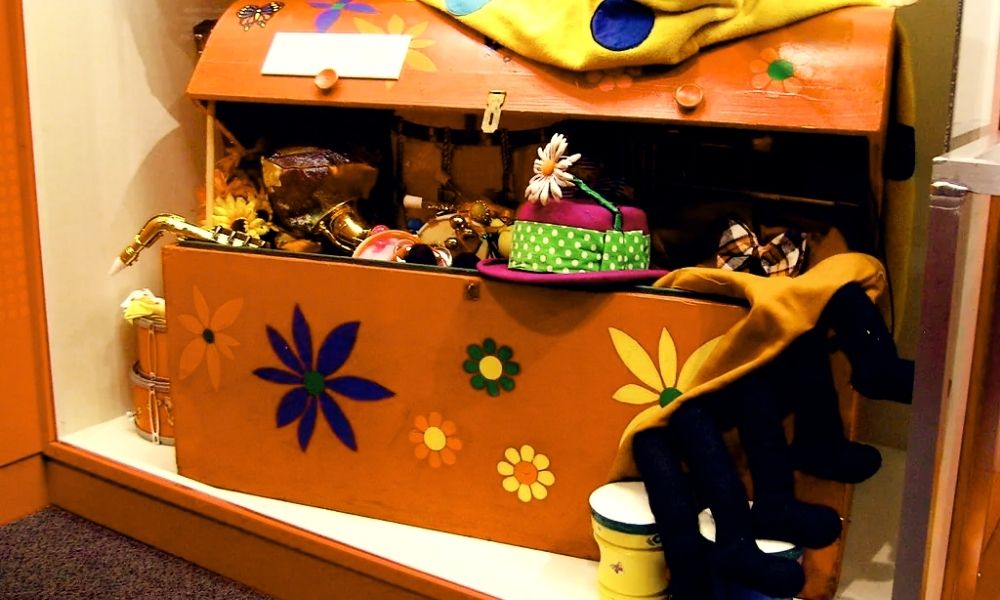
- Gifting without the expectation of reciprocity or response is ideal. When done well, there can be incredible joy in the gifting, in terms of making or choosing the gift and then sharing it. (One of my most joyful gifting experiences was putting together a Tickle Trunk for my nieces when they were young. I found this huge plastic bin that had a hinged and curved up lid that was shaped almost identically to the Mr. Dressup original. I painted it. I scoured a couple of second-hand stores right after Halloween and thrifted all kinds of wonderful wigs, costumes, and accessories without spending a whole lot of money. My nieces played with that gift for years. And, when they had outgrown it, my sister-in-law regifted it to some younger children. It kept giving).
- Gifting to those less fortunate through money, time, and/or talent is beneficial all around. There is so much need. Inviting important others to join us makes it even better. (My youngest and I donated to the Women and Girls Crisis Fund with World Vision Canada which felt fitting to honour her learning about issues of gender equality over this past year).
- It’s healthy to have open conversations with others about gifting in terms of setting money limits, a focus, and changes to what have been recurring gifting patterns for years. This can be especially important when circumstances change in relationships, through stages of life, or financial means (For example, my elderly mother let us know in advance when she would no longer be gifting anyone other than grandchildren).
- Gifting within my available means in terms of money, time, and talent, and the means of all others involved is essential. I think it’s okay if our gifting involves a conscious choice of a little sacrifice (as in the Gift of the Magi by O. Henry) for what matters most to us, but it should not require overextending ourselves to a degree that harms or leaves us needing to recover or owing money.
These kinds of guidelines help make gift giving more meaningful and manageable for me.
Hopefully, something in these ideas either resonated, or sparked an idea for you that will help you bring more consciousness into your holiday season. I’ll be sharing a few more ideas next time so stay tuned.
With Humility, Hope, and Heart,