
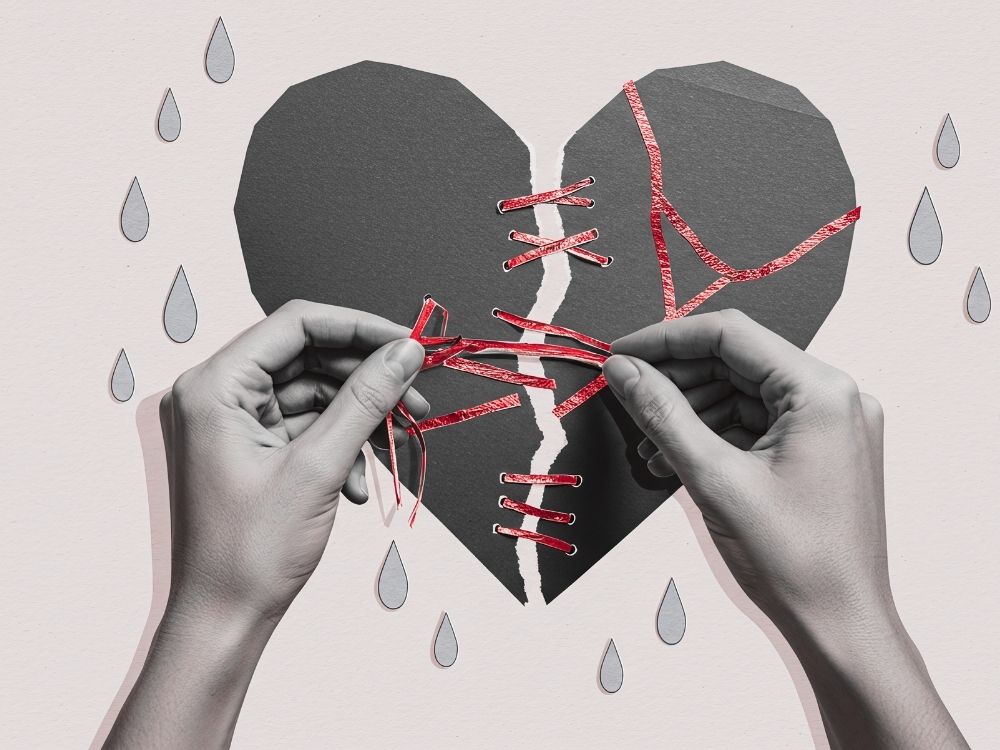
Sometimes the most compelling reasons to recover are not the inspiring ones—they are the uncomfortable, even painful ones we would rather avoid. When it comes to toxic stress and trauma, there is often a threshold where simply “coping” is no longer enough. What once felt manageable begins to take a greater toll on your body, your relationships, your emotional resilience, and your sense of self. Recovery is not just about growth or self-improvement; it is also about responding to what becomes unsustainable over time. These harder truths don’t always feel motivating in the moment, but they often point directly toward why change is necessary.
This post is part of a series: toxic stress and trauma.
There is no right way or right time to reach readiness when it comes to leaning into recovery from toxic stress and trauma(s). There is only the right way and the right time for each person. So, I’ve been sharing all of the reasons as a series of posts. This post looks at the painful reasons.
I consider myself lucky that my way and my time was in my early twenties, although I would not have said that at the time. At the time it was brutal, but in hindsight as each passing year has gotten easier and easier, and better and better, I am grateful that my readiness came early in my adult life.
Part of reaching readiness is grappling with the realities of living with toxic stress and trauma(s) compared with the pathway and the promise of recovery and living without them. For me, coming into recognition of the painful realities of living with trauma(s) was the key thing that moved me to reach for support.
Perhaps they might be similarly helpful for you if you are struggling with toxic stress or trauma.
If you are wanting to use these reasons to help someone else, maybe just share the post with them and let them decide if and when to read it and whether or not to consider it. Don’t try to convince and don’t push.

Symptoms of Toxic Stress and Trauma Perpetuate and Trap Us in Vicious Cycles.
Recovery Helps Us Break Free form These Perpetuating Cycles.
Trauma, at the core, is about entrapped internal distress from experiencing the significant threat to safety, security and survival that overwhelmed us. Toxic stress is about significant and/or prolonged stress activation with thwarted resolution.
Because its trapped and/or thwarted, we have no way of realizing it, releasing it, or resolving it without taking the right actions and getting the right support.
So, we do our best despite the internal distress that is continually broadcasting inside us.
We stay on guard. We react. We have outbursts. We try to push it onto others. We avoid. We suppress. We try and drown it out. We disconnect. We dissociate.
Often this leads to vicious cycles whereby we go around and around the same cycle of A) event or condition, B) stress or trauma reaction, that results in a C) consequence that is either unhelpful, or only temporarily helpful but ultimately unhelpful.
Vicious cycles can happen on a small scale such as each time we:
- overeat or eat something that is not good for us.
- spend money that we don’t have.
- stay up late instead of getting proper sleep.
- yell at or ignore our children or partner.
- go down a rabbit hole on our devices.
The list goes on and on.
After cycling through many times, the consequences add up and now we’re overweight, in debt, exhausted, divorced, addicted… deeply stuck in patterns and problems.
Of course, any of us is susceptible to getting caught in a vicious cycle on a temporary basis. But when we are functioning from toxic stress and/or trauma, we tend to become stuck in more vicious cycles, with more serious consequences, and have a harder time breaking free.
It’s important to clarify that this does not mean we are not responsible for the consequences of our choices and actions even when our vicious cycles are rooted in toxic stress and trauma. It simply means the neurophysiology can provide some understanding of why vicious cycles are so sticky when we are functioning from toxic stress and trauma.
First, a dysregulated nervous system means we are not primarily functioning from our prefrontal cortex or our SELF. This limits our self-awareness and critical thinking, so it’s harder to see what’s happening and our role in it. It limits our flexibility, creativity, and problem solving to figure out something different. And it limits our willpower and discipline to make changes.
Second, we are operating from unresolved internal distress which we feel compelled to quell to have make things a little bit of easier even in the short term. This motivation is intense and is often stronger than any intention we set for ourselves or discipline we may have in the moment to choose otherwise. Third, in the case of trauma, subconscious emotional learning and beliefs about ourselves, others, and the world, as well as trauma adaptations are also driving us.
These come together such that we often feel justified in our vicious cycles, rationalize the necessity of them, insist there are no other options, and/or externalize responsibility for them to others or circumstances. These responses just further entrap us. Over time, the neuropathways in our brain get stronger and stronger, further reinforcing the symptoms of toxic stress, trauma and vicious cycles.
Recovery supports us to develop understanding and compassion for our reactions while slowly replacing them with more helpful ways of responding.
And when we are ready, recovery supports us to realize, acknowledge, and turn into the trapped internal distress so that we can go through it and come out the other side, no longer trapped.
Recovery brings ease to the dysregulated nervous system. This paves the way for improved self-awareness, critical thinking, creativity, problem solving, flexibility, motivation, and discipline. It resolves the internal distress so we aren’t driven by the need to quell it. And it releases and replaces subconscious emotional learnings and beliefs that are unduly influencing us. Each of these things in turn empower us to shift the vicious cycles we have been caught in.

Trauma keeps us Tethered to the Pain of the Past.
Recovery moves us into the Present and the Future.
By its nature, trauma keeps us tethered and even trapped in the past because of the neurophysiological changes that occur as part of it. This happens in at least five ways.
First, we become hypervigilant about threat and danger and have attentional bias. This means we filter everything through the experience of our unresolved trauma and thus misperceive and misstep in response to many things, although we may only recognize it some of the time. (This can also happen with toxic stress).
Second, we have things that quickly move us into pain, panic, avoidance, disconnection, or dissociation that we may be attributing to the present but really are triggering the unresolved trauma from the past or the circumstances surrounding the toxic stress.
Third, with trauma, our default mode network, (a large-scale brain network that comes online and is consistently active whenever the brain is not actively engaged in a task) primarily links to the past instead of balancing the past, present, and future.
Fourth, we have encapsulated traumatic memories operating beyond our awareness that influence most aspects of our lives.
And finally, we have subconscious emotional learnings that were determined at the height of traumatic fear and overwhelm. These core beliefs inform how we see ourselves, others, and the world. They are rigid and inflexible and keep us stuck in the same patterns of thinking and behaving.
Recovery carefully, and with support, helps us turn into how we are unintentionally tethered to the past.
We learn about and address symptoms. For example, we learn to regulate our nervous systems overall and in response to triggers, which helps us stay in the present rather than getting pulled back to the past.
We learn to see and shift unhelpful thinking patterns that result in us repeating problems of the past.
We resolve and release the traumatic memories that have had a hold on us.
Bit by bit, there is less effect of the past on the present. This frees us to bring our full energy forward from the past.
We develop the ability to be safe and secure in the present and even to start looking forward into the future.
Unresolved Trauma Leads to a Long-Lasting Cycle of Recurring Trauma.
Recovering Breaks the Cycle So We Can Move Forward Differently.
Unfortunately, despite people’s best intentions, trauma typically recurs in one, two, or three significant ways.
First, those who are traumatized are susceptible to further traumatization from others. This happens for many reasons such as: lowered sense of worth and self-concept, faulty neuroception and reduced ability to discern who is safe and who is not; reduced ability to hold healthy boundaries in the face of mistreatment; learned helplessness and poor self-efficacy; substance use, and harming behaviors that place them in risky situations.
Second, those who are traumatized tend to traumatize themselves. This can happen through unrelenting harsh expectations, perfectionism and negative self-talk, consistent tendencies to abandon oneself, behaviors of self harm; and staying in situations that are harming and retraumatizing.
Third, those who are traumatized tend to traumatize others or at least harm them significantly as they act out their trauma defenses. Traumatized people move through their relationships and their lives deeply affected and acting out the symptoms of trauma, especially complex trauma that has been present from childhood.
This can occur in near endless forms. They have angry outbursts and abuse others. They have difficulty managing the challenges of life and take it out on others. They have dysregulated nervous systems and collapse under stress, leaving others holding all of the responsibilities instead of rising in resilience. They have thwarted emotional presence and vulnerability and don’t attune to others, including their children or provide them with co-regulation, leaving their children emotionally neglected. They disconnect or dissociate, abandoning others. They have unfair and unrealistic expectations of themselves and others. They use all manner of substances and/or processes to deal with their internal distress, sometimes developing full blown addictions. They have rigid and inflexible thinking, which leaves limited room for working things through with others. They avoid the difficulties in themselves and their lives, leaving messes that land on others. They become perpetrators to others in the same ways that they were perpetrated upon. They minimize, justify, and rationalize their thinking and behaviors or otherwise externalize responsibility and blame others because they cannot realistically see themselves or their trauma(s). These types of trauma patterns (as well as epigenetic changes) are how intergenerational trauma recurs from one generation to the next.
Recovery exposes and supports us to break all of the ways that trauma is recurring including the ways we are unintentionally participating in trauma’s recurrence through our trauma symptoms, reactions, and adaptations.
We learn to recognize the ways that we have been or are susceptible to victimization by others. We shift the patterns of thinking and behaving in ourselves so that we can take up appropriate space and spend time with people who treat us the way we deserve to be treated.
We learn to see the ways that we traumatize, are unfairly hard on, or abandoning of ourselves. We connect the dots of how these behaviors perpetuate trauma symptoms. We unravel them and develop compassionate and supportive ways of being in relationship with ourselves.
We learn to face the ways that we have traumatized others or harmed them significantly. This can be one of the most painful parts of recovery since most of us don’t want to ever cause harm to others. Then we go about the work of changing the functioning that caused the harm and learn to do it differently. And we take full accountability with others. We own it. We apologize sincerely. We accept the limits and boundaries they set with us. We make amends and make it right. We face our shame and forgive ourselves.
By addressing each of the pathways of recurring trauma, we break the cycle. We free ourselves to move forward very differently.
We all know it’s a double-edged sword to face painful realities and reasons. On the one hand, we gain insight and perhaps a more compassionate understanding of ourselves and our situation. But, on the other hand, it breaks our heart to acknowledge how we have been negatively impacted and how we are acting out that negativity in our lives and relationships.
In response, we can feel overwhelmed, powerless, and stuck. While painful reasons can be some of the most difficult to come to terms with, they are also some of the most compelling in terms of motivating us to reach out for our recovery.
If any of these painful reasons apply to you and your life, be gentle and be brave. Take the truths in slowly. And then when you’re ready, take the next step in finding the right supports to help you through.
With Humility, Hope, and Heart,

SOURCES:
Anderson, F. (2021). Transcending Trauma. Healing Complex PTSD with Internal Family Systems Therapy. Eau Claire WI: PESI Publishing.
Arnsten, A. F T. (2009). Stress signaling pathways that impair prefrontal cortex structure and function. Nature reviews. 10,6, 410–422.
Ecker, B. & Hulley, L. (2005-2019). Coherence Therapy. Practice and Training Manual. Coherence Therapy Institute.
Ecker, B., Ticic R. & Hulley, L. (2022). Unlocking the Emotional Brain. Eliminating Symptoms at Their Roots Using Memory Reconsolidation. New York: Routledge.
Fatter, D. (2022). Trauma Treatment Certification Training Course materials.
Fisher, J. (2021). Transforming the living legacy of trauma- A Workbook for survivors and therapists.
Heller L., & LaPierre A. (2012) Healing developmental trauma- How early trauma affects self-regulation, self-image and the capacity for relationship. Berkeley: North Atlantic Books.
Hermann, J. (1992) Trauma and recovery- The Aftermath of violence. New York: Basic Books.
Larkin, H., Felitti, V., & Anda, R. (2014). Social work and adverse childhood experiences: Implications for practice and health policy. Social Work in Public Health, 29, 1-16.
Maté, G. & Maté, D. (2022). The Myth of Normal. Trauma, Illness & Healing in a Toxic Culture. Toronto: Knopf Canada.
Maté, G. (2003). The Hidden Cost of Stress. Toronto: Knopf Canada.
Merritt, M.B., Cronholm, P., Davis., Dempsey, S., Fein, J., Kuykendall, S.A., & Wade, R. (2013). Findings from the Philadelphia Urban ACE Survey. Institute for Safe Families. https://www.rwjf.org/en/library/research/2013/09/findings-from-the-philadelphia-urban-ace-survey/html.
Nelson, C.A., Bhutta, Z. A., Burke Harris, N., Danese, A., & Samara, N. (2020). Toxic Stress and PTSD in Children. Adversity in childhood is linked to mental and physical health throughout life. BMJ, 371:m3048 | doi: 10.1136/bmj.m3048
Porges, S. (2019). Clinical Applications of the Polyvagal Theory: trauma, attachment, self-regulation and emotions.
Schwartz, A. (2024). Complex PTSD Training Course Materials.
Simington, J. (2013). Trauma Recovery Certification Course Handbook.